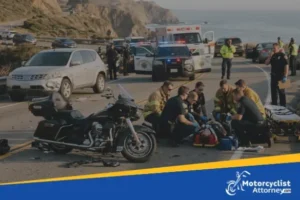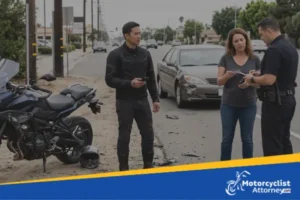
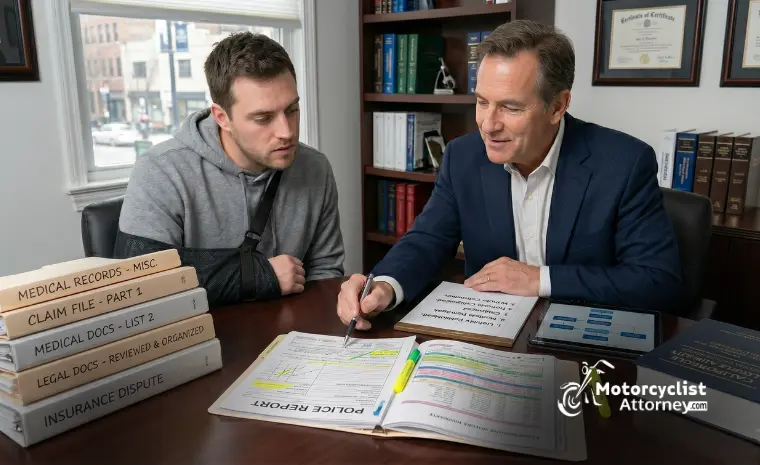
A motorcycle crash near the I-10, I-405, or US-101 can turn a normal ride into an emergency within seconds. After the ambulance ride, hospital visit, and insurance calls, one document quickly becomes central: the police report.
In a California motorcycle accident claim, the police report is often one of the first pieces of evidence used to evaluate what happened and who may be at fault.
In this guide, you’ll learn how it influences liability, what evidence it includes, how officer observations matter, what to do if it’s inaccurate, how to request it, and why legal strategy is critical.
Why a Police Report Matters After a Motorcycle Accident
After a motorcycle crash, the police report becomes one of the first documents reviewed by insurers when evaluating a California motorcycle accident claim. It provides a structured summary of the incident, including:
- Key incident details (time, location, conditions)
- Involved parties and vehicle information
- Visible property damage
- Witness names and contact information
- The officer’s initial investigation findings
Because it captures early evidence, the police report can strongly influence how a claim is handled. However, it is important to understand that it does not determine fault on its own.
What Information Is Usually Included in a Police Report
In a California motorcycle accident claim, the police report provides a structured snapshot of the crash and the initial investigation. While formats may vary by law enforcement agency, most reports include:
- Date, time, and location of the incident
- Driver and vehicle identity information
- License plate details and report number
- The officer’s observations at the scene
- A diagram or collision summary explaining how the crash occurred
- Any traffic citation issued during the investigation
These elements form the foundation insurers use when reviewing a motorcycle accident claim.
How a Police Report Helps Prove Fault in a California Motorcycle Accident Claim
In a California motorcycle accident claim, the police report is often one of the first tools used to analyze fault and liability.
It helps establish:
- The sequence of events leading to the crash
- Signs of possible negligence by any driver involved
- Whether statements match the physical evidence at the scene
This matters because insurers rely on the police report to:
- Assign liability
- Evaluate the strength of the claim
- Estimate potential settlement value
While not final proof, the report often shapes how disputed fault is argued—and how much compensation may be at stake.
Why Officer Observations and Witness Information Matter
In a California motorcycle accident claim, certain parts of the police report often carry more weight than others, especially when insurers begin evaluating fault.
Key elements include:
- The officer’s observations at the scene
- Witness statements or eyewitness testimony
- Documented scene conditions (lighting, traffic, road layout)
- Vehicle identification (license plate number)
- The position of vehicles after the collision
- Visible injuries and property damage
Insurance companies frequently rely on these details to frame the narrative of the crash, making them critical in how liability and claim value are assessed.
What If the Police Report Is Inaccurate or Incomplete?
In a California motorcycle accident claim, an inaccurate or incomplete police report can create challenges, but it does not determine the final outcome of your case. Errors may occur if the officer did not witness the incident or relied on limited information during the initial investigation.
These issues can be challenged with:
- Photographs from the scene
- Medical records linking injuries to the crash
- Dashcam or video footage showing how the incident occurred
- Additional witness statements
A flawed police report can be corrected or supplemented with stronger evidence, helping ensure your claim is evaluated fairly.
How to Request a Copy of Your Police Report in California
To move forward with a California motorcycle accident claim, obtaining your police report is an important step. The process depends on which law enforcement agency handled the incident.
- CHP reports: Request through the CHP crash report system or submit Form CHP 190 if you are a party of interest
- LAPD traffic collision reports: Available through online request systems or by mail via the LAPD reporting process
Keeping a copy of your police report helps you review the details and prepare for insurance or legal steps.
Why Legal Guidance Matters When Reviewing a Police Report
In a California motorcycle accident claim, reviewing a police report is not just about reading what happened; it’s about understanding how it affects your case. This is where legal strategy becomes critical.
An experienced attorney can identify:
- Missing evidence that may weaken your claim
- Harmful wording that insurers may use against you
- Potential liability issues or signs of negligence
- Inconsistencies between the report and your medical records
Because insurers rely heavily on the police report, a careful legal review can help protect your claim and strengthen your position during negotiations.
How a Motorcycle Accident Lawyer in Los Angeles Helps Protect Your Claim
After a crash, our skilled motorcycle accident lawyer in Los Angeles can play a critical role in protecting your California motorcycle accident claim, especially when the police report becomes central to the case. This is particularly important in complex traffic areas near major intersections and freeway corridors, such as the I-10, I-405, and US-101.
Our legal team can help by:
- Reviewing the police report line by line for accuracy and gaps
- Preserving key evidence from the investigation and accident reports
- Challenging insurer misuse of the report during the insurance claim process
- Strengthening your settlement position based on facts and documentation
- Preparing for litigation if the claim becomes disputed
This strategic support helps ensure your claim is evaluated fairly and fully.