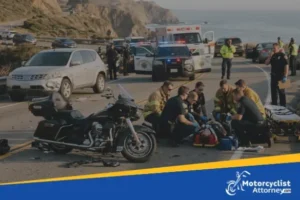
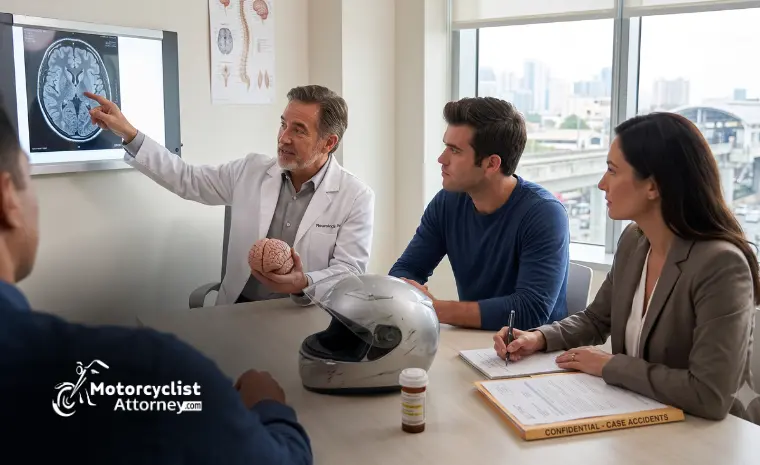
A helmet can reduce the risk of serious harm, but it cannot prevent every brain injury. A traumatic brain injury after a motorcycle crash may develop when a rider’s head strikes a vehicle, pavement, or another object. It can also occur when the force of impact causes the brain to move rapidly inside the skull—even without a direct blow.
Symptoms may appear immediately or emerge hours or days later, making prompt evaluation essential. For California motorcyclists, recognizing the warning signs can protect both their health and their ability to pursue compensation after a collision.
What Is a Traumatic Brain Injury?
A traumatic brain injury, or TBI, occurs when a bump, blow, jolt, or penetrating injury affects how the brain functions. Brain Injuries can range from a mild concussion to severe damage that causes lasting cognitive, physical, or behavioral limitations.
About 75% of TBIs annually are mild, according to the FDA. However, “mild” refers to initial clinical classification, not the impact on life. Any symptoms of TBI following a head impact suggest brain injury, and even mild TBIs can cause some damage.
A motorcycle rider does not have to lose consciousness to sustain a TBI. Head trauma may occur during:
- Direct impact with a windshield, door, curb, or roadway
- Rapid acceleration and deceleration during motorcycle crashes
- Ejection from the motorcycle
- Rotational movement of the head and neck
- Secondary impact after the initial motorcycle collision
Common Signs of a Traumatic Brain Injury
Symptoms vary by person and injury severity. Some appear at the accident scene, while others may take hours or days to become noticeable.
Physical symptoms
Watch for:
- Persistent or worsening headache
- Dizziness or balance problems
- Nausea or vomiting
- Blurred or double vision
- Sensitivity to light or noise
- Fatigue, weakness, or unusual drowsiness
- Ringing in the ears
- Difficulty with coordination
- Changes in sleep patterns
A head injury may be present even when a motorcycle helmet appears intact, or the person has no visible wound.
Cognitive symptoms
A person may experience:
- Confusion or disorientation
- Memory gaps
- Difficulty concentrating
- Slower thinking or responses
- Trouble following conversations
- Problems making decisions
- Difficulty remembering new information
These symptoms can interfere with work, school, driving, and everyday responsibilities.
Emotional and behavioral changes
Family members may notice changes before the injured person does. Possible signs include:
- Irritability or sudden anger
- Anxiety or sadness
- Unusual emotional reactions
- Loss of motivation
- Impulsive behavior
- Personality changes
- Social withdrawal
Moderate and severe injuries may cause long-term problems involving memory, communication, movement, mood, and behavior.
When Is Emergency Care Necessary?
Call 911 or seek emergency medical treatment immediately when a person shows signs of a traumatic brain injury after a motorcycle crash, including:
- A headache that continues to worsen
- Repeated vomiting
- Seizures or convulsions
- Unequal pupil size
- Slurred speech
- Increasing confusion or agitation
- Weakness or numbness
- Loss of coordination
- Inability to wake up
- Loss of consciousness
Do not attempt to diagnose the condition at home. A healthcare professional may use neurological testing, imaging, observation, and other clinical information to evaluate the injury.
Prompt care also creates medical records connecting the symptoms to the incident. Delayed care can allow insurance companies to argue that the condition was minor, unrelated, or caused by something else.
How Motorcycle Collisions Cause Brain Injuries
Motorcyclists are exposed to direct impact forces that occupants of enclosed vehicles may avoid. Common contributing factors include:
- Distracted or impaired drivers
- Speeding or reckless driving
- Unsafe lane changes
- Drivers failing to yield
- Rear-end motorcycle accidents
- Poor road conditions
- Debris, potholes, or defective roads
- Defective motorcycle components
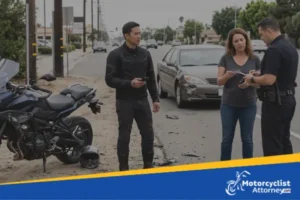
A driver may breach their duty of care by texting, following too closely, turning across a rider’s path, or violating traffic laws. Police reports, witness statements, surveillance footage, and vehicle damage may help identify what happened.
Reconstruction experts may also examine skid marks, impact points, roadway measurements, and electronic data from the accident site.
California Motorcycle Rules That May Affect a Claim
California law requires motorcycle operators and passengers to wear a safety helmet that meets applicable federal standards. California Vehicle Code Section 27803 establishes the state’s motorcycle helmet laws.
Failure to wear a helmet does not automatically prevent an injured party from recovering compensation. However, the defense may argue that helmet use could have reduced the severity of certain motorcycle accident injuries.
California also recognizes lane splitting. Vehicle Code Section 21658.1 defines lane splitting as operating a two-wheeled motorcycle between rows of stopped or moving vehicles in the same lane.
The practice is not automatic proof that the motorcyclist caused the crash. Liability depends on the surrounding circumstances, including speed, visibility, traffic flow, spacing, and nearby lane changes.
Under comparative negligence principles, compensation may be reduced by the rider’s assigned percentage of responsibility. A Los Angeles motorcycle accident lawyer can challenge unsupported blame and examine whether another driver’s conduct primarily caused the impact.
What Compensation May Be Available?
A personal injury claim may seek compensation for losses resulting from the crash, including:
- Medical expenses
- Future rehabilitation and care
- Lost wages
- Reduced earning capacity
- Pain and emotional distress
- Property damage
- Motorcycle repairs or replacement
- Other qualifying medical bills
The value of motorcycle accident cases depends on the injury’s severity, available evidence, insurance coverage, and long-term effects.
Motorcycle accident lawyers may consult physicians, vocational specialists, economists, and other professionals when documenting future losses. This may be especially important when symptoms prevent accident victims from returning to their previous employment.
What Should You Do After a Suspected TBI?
Protect your health and preserve evidence by taking these steps:
- Seek care promptly. Describe every symptom, even if it appears minor.
- Follow your provider’s instructions. Attend appointments and complete recommended testing.
- Track changes. Record headaches, memory problems, sleep disruption, mood changes, and missed work.
- Preserve evidence. Save photographs, helmet and clothing damage, repair estimates, and correspondence.
- Request official documents. Obtain available police reports and related incident information.
- Avoid recorded statements. Do not speculate about fault or injury severity.
- File a claim carefully. Review the full extent of your losses before accepting a settlement.
- Discuss your legal options. A Los Angeles motorcycle accident attorney can explain the Legal process and applicable deadlines.
When possible, photograph the accident site, roadway hazards, traffic signs, debris, and surrounding businesses that may have surveillance footage.
How a Lawyer Can Assist an Injured Rider
A Los Angeles motorcycle accident lawyer can investigate the motorcycle accident, preserve evidence, communicate with insurers, and calculate present and future damages.
Legal representation may be especially valuable when the case involves disputed liability, lane splitting, multiple vehicles, or delayed neurological symptoms. An attorney may also coordinate evidence from Los Angeles County hospitals, specialists, witnesses, and treating providers in Los Angeles, CA.
Many firms handle qualifying cases through a contingency fee arrangement. This generally means the client does not pay upfront legal fees, and the attorney’s compensation is collected from a successful recovery under the agreed terms.
Get Help After a Motorcycle-Related Brain Injury
A traumatic brain injury after a motorcycle crash can affect memory, employment, relationships, and long-term independence. Symptoms should never be dismissed simply because the rider remained conscious or initially felt well.
Motorcyclist Attorney helps injured riders evaluate fault, document losses, and pursue available compensation. Contact us for a free consultation to discuss your legal options.