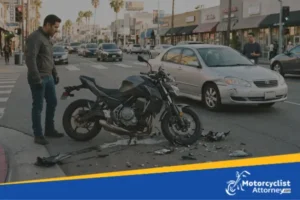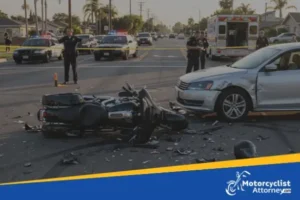

Surviving a motorcycle accident can bring immediate relief, but questions about the condition of your bike may quickly follow. A motorcycle that appears to have only cosmetic scratches or broken plastic panels may have hidden motorcycle frame damage that compromises its structural integrity and makes it unsafe to ride.
When a motorcycle’s frame absorbs the force of a collision, the resulting structural damage may be difficult or costly to repair. Understanding your rights during the insurance claims process can help you seek fair compensation without compromising your safety.
Serious motorcycle collisions can occur on busy Southern California highways and intersections. Roads such as the Pacific Coast Highway (PCH), Interstate 405, Sepulveda Boulevard, and Wilshire Boulevard in Los Angeles have traffic conditions in which unsafe turns and vehicle collisions can cause substantial damage.
When a crash results in personal injuries and significant property damage, Los Angeles motorcycle accident lawyers can help riders evaluate their claims, review insurance settlement offers, and address potentially overlooked structural damage.
For injured motorcyclists, obtaining legal representation can also help address questions about liability and insurance coverage. A motorcycle accident attorney may review video footage and photographs from the accident scene, witness statements, and other key evidence or relevant documents to identify the at-fault party and evaluate the rider’s legal options.
What Is Motorcycle Frame Damage?
A motorcycle frame, also called the chassis, is the primary structural component that supports the engine, connects the front fork assembly, holds the rear swingarm, and maintains the motorcycle’s riding geometry.
Unlike passenger vehicles, which may absorb collision forces through designated body structures, motorcycles depend heavily on precise alignment between their front and rear wheels.
Even relatively small changes in frame geometry can affect stability, steering, and overall handling.
Motorcycle frame damage does not always involve visibly bent metal or a completely broken frame. Structural problems can develop in less obvious ways.
Common types of motorcycle frame damage include:
- Frame twisting or axial misalignment: This occurs when the steering head shifts out of alignment with the swingarm pivot, potentially causing the front and rear wheels to track along different paths.
- Stress cracks or microfractures: Small cracks may develop around factory welds, aluminum castings, or other high-stress areas after a sudden impact.
- Front-end compression or buckling: A direct collision involving the front wheel can deform frame tubes, the steering neck, or surrounding structural components.
A motorcycle with compromised frame geometry may experience reduced steering precision, unstable handling, or dangerous oscillations at higher speeds.
These oscillations, sometimes called speed wobbles or tank slappers, can make the motorcycle difficult to control.
Because structural damage may not be immediately visible, a professional inspection is important before determining whether the motorcycle is safe to operate.
Signs of Motorcycle Frame Damage After an Accident
Not all motorcycle frame problems are obvious immediately after a crash. In some cases, an initial insurance inspection may focus on visible damage without identifying underlying structural issues.
However, several mechanical and visual warning signs may indicate motorcycle frame damage after an accident.
These include:
- The motorcycle pulls to one side: A motorcycle that consistently drifts left or right may have alignment problems involving the frame, wheels, suspension, or steering components.
- Cracked or peeling paint near frame welds: Excessive stress can deform metal around welded joints, causing the original paint or protective coating to crack or separate.
- Steering resistance or unusual stiffness: Difficulty turning the handlebars smoothly from side to side may indicate problems with the steering head, bearings, or surrounding structural components.
- Misaligned motorcycle components: A fuel tank, side fairing, exhaust bracket, or other mounted component may no longer fit correctly against its original attachment points.
- Improper front-and-rear wheel alignment: When viewed from behind during a professional inspection, the front wheel may appear offset from the rear wheel’s centerline.
These warning signs do not automatically confirm frame damage. Suspension, steering, and wheel components can produce similar symptoms.
A qualified motorcycle technician should inspect the bike to identify the actual source of the problem.
Even when structural damage appears minor, the force of a collision may result in severe injuries. Riders should seek medical attention when appropriate and avoid operating a motorcycle that may have compromised structural integrity until a qualified technician completes an inspection.
How Is Motorcycle Frame Damage Inspected and Measured?
A basic visual inspection may not detect all types of motorcycle frame damage.
Small changes in steering geometry, including the motorcycle’s rake and trail measurements, can be difficult to detect without specialized equipment.
To determine whether the frame remains within manufacturer specifications, qualified motorcycle repair specialists may use advanced diagnostic techniques.
1. Computerized Laser Measurement Systems
Specialized motorcycle frame measurement systems, such as Scheibner and Mega-M.A.X., can help technicians evaluate structural alignment.
These systems use precision measurement equipment to assess important reference points, including:
- Swingarm pivot alignment
- Steering head positioning
- Front and rear wheel alignment
- Frame geometry and dimensional tolerances
Technicians may compare the measurements with applicable manufacturer specifications to identify possible deformation.
2. Dye Penetrant and Ultrasonic Testing
Some structural defects cannot be detected through visual inspection alone.
Non-destructive testing methods may help identify cracks or other defects in certain frame materials.
Dye penetrant testing can reveal surface-breaking cracks around welds and high-stress areas. Ultrasonic testing may help identify particular internal defects when appropriate for the component and material.
These techniques can be especially useful when evaluating suspected damage to aluminum or welded frame components.
3. Partial or Complete Motorcycle Disassembly
In some cases, technicians may need to remove fairings, the fuel tank, electrical components, or other parts to access critical frame connections.
This process can help identify damage near engine mounts, structural brackets, and other areas hidden by the motorcycle’s bodywork.
For example, a bent or seized engine mounting bolt may indicate that substantial force reached the surrounding frame structure.
A comprehensive motorcycle frame inspection can provide documentation that helps determine whether repairs are technically feasible and economically reasonable.
When Is Motorcycle Frame Damage Considered a Total Loss?
In California, a motorcycle may be declared a total loss when repair costs exceed its pre-accident value.
Insurance companies generally consider the motorcycle’s actual cash value (ACV) immediately before the collision, estimated repair costs, and other relevant factors, including salvage value.
Actual cash value generally reflects the motorcycle’s fair market value before the accident.
Although not every damaged motorcycle is automatically totaled, significant structural damage can make replacement more practical than repair.
Several factors influence a motorcycle total loss insurance claim.
| Determining Factor | Impact on a Total Loss Decision |
| Frame replacement costs | A replacement frame may cost thousands of dollars, depending on the motorcycle’s make, model, and availability of parts |
| Extensive labor requirements | Frame replacement can require substantial disassembly, component transfers, and reassembly, increasing labor expenses |
| Structural safety concerns | Certain types of frame damage may not be repairable within manufacturer specifications, making replacement necessary |
Why Can Frame Damage Make a Motorcycle a Total Loss?
Replacing a motorcycle frame often requires removing major mechanical components and rebuilding the motorcycle around the replacement structure.
This process can involve substantial labor costs, replacement parts, and additional inspections.
Furthermore, some damaged frames cannot be safely straightened or repaired using approved procedures.
If the estimated cost of restoring the motorcycle exceeds what is economically reasonable relative to its pre-accident value, the insurer may determine that the motorcycle is a total loss.
UnderCalifornia Vehicle Code § 544, a total-loss salvage vehicle is defined as a vehicle considered uneconomical to repair.
However, a total loss determination depends on the circumstances of the damage and applicable insurance requirements.
How to Dispute a Low Total Loss Insurance Offer
Insurance companies may use vehicle valuation platforms, including CCC ONE or Mitchell, to estimate a motorcycle’s pre-accident value.
These assessments may rely on comparable vehicles, mileage, condition, optional equipment, and market information.
However, a valuation may be inaccurate when the motorcycles selected for comparison have substantially different features, greater mileage, poorer condition, or prices from less relevant markets.
If you believe an insurer has undervalued your motorcycle, you can take several steps to support your claim.
1. Request and Review the Valuation Report
Ask the insurance company for a copy of the report used to calculate your motorcycle’s value.
Carefully review the information for inaccuracies involving:
- Year, make, and model
- Odometer mileage
- Pre-accident condition
- Anti-lock braking systems (ABS)
- Electronic suspension and riding modes
- Factory-installed options and equipment
Incorrect or missing details may affect the estimated value.
2. Collect Comparable Motorcycle Listings
Research motorcycles with similar specifications in your local market.
Look for listings that closely match your motorcycle’s:
- Model year
- Manufacturer and model
- Mileage
- Condition
- Factory equipment and available features
Listings from California dealerships may help establish relevant market prices.
However, advertised asking prices do not necessarily establish the amount a motorcycle would sell for.
3. Document Recent Maintenance and Improvements
Maintenance records can provide additional information about your motorcycle’s pre-accident condition.
Useful documentation may include:
- Recent tire replacements
- Major maintenance services
- Significant mechanical improvements
- Receipts for replacement components
- Photographs showing the motorcycle before the collision
These records may support your valuation dispute, although maintenance expenses do not automatically increase the motorcycle’s actual cash value by their full cost.
4. Review Your Policy’s Appraisal Clause
If you are disputing the value assigned by your own insurance company, review your policy to determine whether it includes an appraisal provision.
Some policies allow an independent appraisal process when the policyholder and insurer disagree about the amount of a covered loss.
The availability and procedures for this option depend on the policy’s terms.
What if You Also Sustained Injuries in the Motorcycle Accident?
A collision involving substantial motorcycle property damage may also result in personal injuries. Depending on the severity of the accident, an injured rider may need ongoing treatment, physical therapy, or rehabilitation.
In addition to property damage, a rider may have a separate claim for medical expenses, lost income, and other damages. Medical records, treatment documentation, and related expenses can help establish the extent of the injuries and their financial consequences.
Depending on the circumstances, non-economic damages in motorcycle accident claims may include physical pain, emotional distress, and loss of enjoyment of life.
In certain cases involving oppression, fraud, or malice, punitive damages may also be available under California law, although they are not awarded in ordinary negligence claims.
Before accepting an insurance settlement, carefully review the release agreement to determine whether it resolves only property damage or also includes personal injury claims. Signing a broad release may affect your ability to pursue additional compensation.
Motorcycle Accessories, Riding Gear, and Other Damages to Include in Your Claim
A motorcycle accident property damage claim may involve more than the cost of repairing or replacing the motorcycle itself.
Riding gear, personal equipment, and aftermarket accessories damaged in the collision may also represent compensable losses.
Proper safety gear, including helmets, protective jackets, gloves, and boots, plays an important role in reducing the risk of injury in a motorcycle accident.
However, reimbursement depends on the applicable insurance coverage, the responsibility for the accident, and documentation of the damage to the property.
Protective Motorcycle Riding Gear
Motorcyclists often invest in protective equipment designed to reduce the risk of serious injuries.
After a collision, inspect and document damage to items such as:
- Motorcycle helmets: A helmet that sustained an impact during a crash may no longer provide its intended protection. Follow the manufacturer’s replacement guidance and applicable safety recommendations, including those published by theNational Highway Traffic Safety Administration (NHTSA).
- Protective jackets: Leather or textile jackets with abrasion-resistant materials and protective armor.
- Motorcycle pants: Riding pants with reinforced materials, including Kevlar or other abrasion-resistant fabrics.
- Motorcycle boots: Protective footwear designed to provide ankle support and impact protection.
- Riding gloves: Protective gloves with reinforced palms, knuckle protection, or abrasion-resistant materials.
Keep photographs, receipts, and product information whenever possible to document the condition and value of the damaged equipment.
Aftermarket Motorcycle Accessories
Custom motorcycle components and installed accessories may increase the overall value of a rider’s property.
Examples include:
- Aftermarket exhaust systems
- Custom or upgraded seats
- Engine guards and crash bars
- Hard luggage cases
- Navigation systems and mounting brackets
- Other documented motorcycle modifications
Keep purchase receipts, installation records, photographs, and relevant financial statements to help establish that these accessories were installed before the collision.
Coverage for aftermarket equipment varies by policy, and insurers may apply specific exclusions or limitations.
Documenting these items can help you determine whether they should be considered as part of your property damage claim.