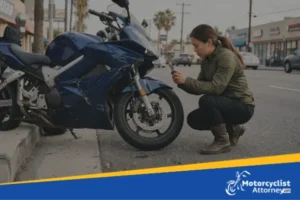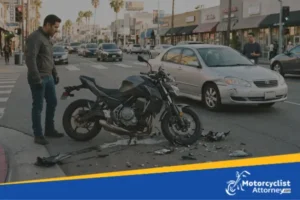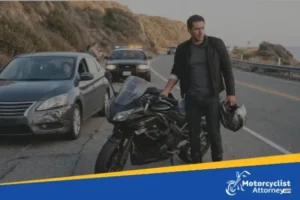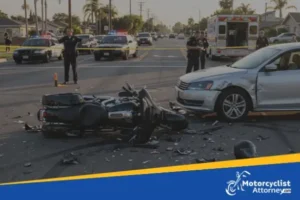
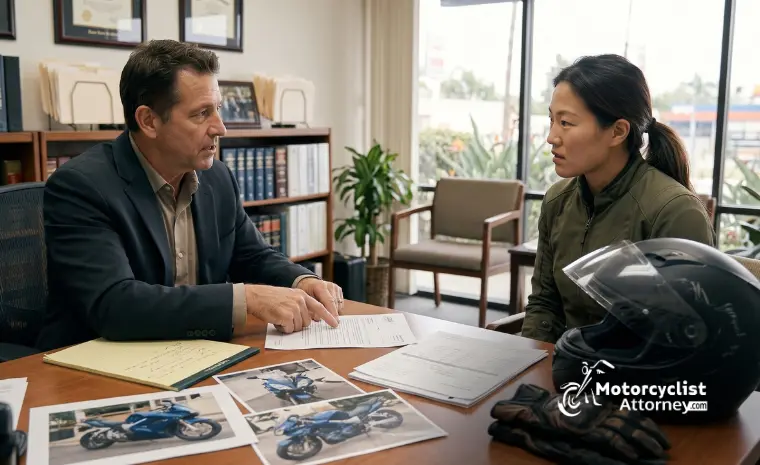
Surviving a motorcycle collision can bring immediate relief, but filing a motorcycle damage claim in the days that follow may involve complicated mechanical assessments and financial disputes with insurance companies.
Unlike cars, motorcycles lack extensive exterior body panels designed to absorb collision forces. Even relatively minor damage to the engine, suspension, or other structural components can affect a motorcycle’s stability and make it unsafe to operate.
These accidents can occur along busy Southern California roads and intersections. Areas such as Sepulveda Boulevard, Wilshire Boulevard, Interstate 405, Venice Boulevard, and Washington Boulevard in the greater Los Angeles area experience heavy traffic, making unsafe turns and collisions more likely and causing significant motorcycle damage.
When a crash causes serious structural damage and personal injuries, consulting Culver City motorcycle accident lawyers can help riders navigate insurance disputes, evaluate settlement offers, and understand their legal options.
A motorcycle accident attorney may also review photographs from the accident scene, witness statements, and other available evidence to help determine liability after a motorcycle crash.
A properly documented motorcycle damage claim can also help establish whether an insurer’s initial repair estimate accounts for the full extent of the damage.
Front Fork Damage: Warning Signs, Risks, and Diagnosis
The front suspension absorbs substantial force during a frontal or angled motorcycle collision.
Motorcycle forks connect the front wheel to the steering assembly and play an important role in suspension performance, steering geometry, and braking stability.
Even minor deformation can affect how the motorcycle responds during normal riding or emergency maneuvers.
Common signs of motorcycle fork damage include:
- Bent fork tubes: A slight bend that is difficult to detect visually can interfere with normal suspension movement, causing stiffness, binding, or uneven compression.
- Leaking fork seals: Suspension oil leaking around the fork seals may indicate damage to the fork tubes, seals, or internal components. Scratches, deformation, or misalignment can contribute to these leaks.
- Misaligned triple clamps, also known as triple trees, secure the fork tubes to the steering assembly. When the upper or lower clamps become twisted or misaligned, the forks may no longer remain parallel, potentially causing steering problems or pulling to one side.
Should Bent Motorcycle Forks Be Repaired or Replaced?
Bent motorcycle fork tubes should be evaluated by a qualified technician before any repair is attempted.
Metal deformation can affect structural strength, suspension performance, and the reliability of critical components.
Although certain repair methods may be available for specific components, straightening damaged fork tubes is not appropriate in every situation. The repair decision should follow the motorcycle manufacturer’s specifications and applicable safety standards.
When filing a motorcycle damage claim, request a detailed inspection and documentation explaining whether the damaged components require replacement.
If replacement is necessary, ask whether original equipment manufacturer (OEM) motorcycle parts are appropriate to restore the motorcycle to its pre-accident condition.
Motorcycle Frame Damage: Why Does It Often Lead to a Total Loss?
The motorcycle frame, also called the chassis, supports the engine, swingarm, steering assembly, and other essential mechanical components.
A substantial impact can cause frame twisting, wheel misalignment, or small fractures around welded joints.
Unlike visible cosmetic damage, damage to a motorcycle’s frame may affect its structural integrity and long-term safety.
In California, significant frame damage can result in a motorcycle being declared a total loss for several reasons.
1. High Frame Replacement Costs
A replacement motorcycle frame may represent a substantial portion of the vehicle’s market value.
Depending on the motorcycle’s make and model, replacement can involve expensive factory components and documentation related to the vehicle identification number (VIN).
Because the frame may contain the VIN, replacement must also comply with applicable manufacturer, title, and registration requirements.
2. Extensive Labor Requirements
Replacing a motorcycle frame is a complex mechanical procedure.
Technicians may need to disassemble nearly the entire motorcycle, transfer major components to the replacement frame, and carefully reassemble the vehicle.
This process can involve substantial labor, specialized equipment, and additional alignment inspections.
3. Structural Safety and Repair Liability
Some types of frame damage cannot be repaired safely or within manufacturer specifications.
Repair facilities may decline to straighten or weld compromised frames when they cannot verify that the repair will restore the required structural integrity.
A motorcycle returned to service with unresolved frame damage may present serious handling and safety risks.
When Is a Motorcycle Considered a Total Loss in California?
Insurance companies generally consider the estimated repair costs, the motorcycle’s actual cash value (ACV), and other relevant factors when determining whether a vehicle is economically repairable.
Actual cash value generally reflects the motorcycle’s fair market value immediately before the accident.
Salvage value may also be relevant to the insurer’s evaluation.
When the cost of restoring the motorcycle to its pre-accident condition is disproportionate to its value, the insurer may declare it a total loss.
However, no single repair-cost formula determines the total loss value for every motorcycle claim in California.
A detailed inspection and accurate valuation are essential when evaluating whether repair or replacement is appropriate.
Motorcycle Engine Damage: Beyond Scratched Covers
During a motorcycle slide or side-impact collision, the engine may strike or scrape against the pavement.
Although scratched engine covers are often visible, the impact may also cause internal mechanical damage that is harder to detect.
Some motorcycle engine damage can remain unnoticed until the motorcycle is inspected or operated again.
Potential problems include:
- Loss of lubrication while the engine is running: If a motorcycle remains on its side while the engine continues operating, the oil pickup may become uncovered or lubrication may be disrupted. Depending on the engine design and circumstances, this can cause excessive wear or damage to internal components, including connecting rods and camshafts.
- Cracked or broken engine mounts: Mounting points that secure the engine to the motorcycle frame may fracture during a collision. In some cases, the impact can also damage the engine casing or surrounding structural components.
- Cracked alternator or clutch covers: Fractures in these protective covers may allow engine oil to escape or contaminants to enter exposed mechanical areas, potentially causing additional damage.
How Can You Identify Hidden Motorcycle Engine Damage?
A visual inspection may not reveal every mechanical problem caused by a collision.
Depending on the suspected damage, a qualified motorcycle repair specialist may recommend diagnostic procedures such as:
- Compression testing: Helps evaluate the condition of engine cylinders and certain internal components.
- Dye-based leak detection: Can assist in locating oil leaks or identifying damage to engine covers and seals.
- Borescope inspection: Allows technicians to examine certain internal areas without completely disassembling the engine.
These tests can provide supporting documentation for a motorcycle insurance claim when hidden engine damage is suspected.
If the motorcycle was involved in a significant collision, avoid restarting or operating the engine until a qualified technician determines it is safe to do so.
How Insurance Companies May Minimize Serious Motorcycle Damage
Insurance companies generally evaluate motorcycle damage based on repair estimates, inspection findings, coverage terms, and the vehicle’s pre-accident condition.
However, disputes can arise when an initial estimate does not fully account for structural or mechanical problems.
Some common concerns in motorcycle insurance claims include:
- Using aftermarket or salvaged parts: An insurer may estimate repairs using non-OEM or previously used parts instead of new factory replacement components, even when the suitability of those alternatives is disputed.
- Focusing on cosmetic repairs: Initial estimates may address scratches, broken covers, or visible damage without fully evaluating potentially compromised steering and suspension components.
- Questioning specialized inspections: An insurer may dispute the need for laser frame measurements, computerized alignment testing, or other diagnostic procedures intended to identify hidden damage.
Insurance estimates should reasonably account for covered damage and the repairs needed to restore the motorcycle to its pre-accident condition.
When a repair estimate appears incomplete, a qualified motorcycle repair specialist may provide additional documentation supporting necessary repairs or replacements.
Disagreements with insurance claims adjusters may also involve questions about policy coverage. For example, comprehensive coverage generally applies to non-collision incidents such as theft, vandalism, or certain weather-related damage, while collision coverage typically applies to damage caused by a motorcycle crash. Seeking legal advice may help accident victims understand their available insurance options and evaluate disputed repair estimates.
Motorcycle riders can also consult the National Highway Traffic Safety Administration (NHTSA) for general motorcycle safety information.
What if the Motorcycle Accident Also Caused Personal Injuries?
When a collision causes both property damage and physical injuries, the rider may have separate claims involving the motorcycle and personal losses.
Depending on the circumstances, an injured motorcyclist may seek compensation for medical expenses, lost income, and other qualifying damages.
These losses may include medical bills, lost wages, and the cost of ongoing treatment, such as physical therapy. Medical records, treatment documentation, and proof of lost income can help establish how the accident affected the rider’s health and financial circumstances.
In a personal injury claim, non-economic damages in motorcycle accident cases may include physical pain, emotional distress, and loss of enjoyment of life.
These non-economic losses are commonly described as pain and suffering and may be considered separately from the cost of repairing or replacing the motorcycle.
Property damage and bodily injury claims involve different categories of losses. However, they may arise from the same accident and require coordinated handling.
Before accepting an insurance settlement, review the release agreement carefully to understand whether it resolves only property damage or also affects potential personal injury claims.
Steps to Build a Strong Motorcycle Property Damage Claim
Preparing a well-documented motorcycle property damage claim can help you challenge incomplete estimates and support the actual cost of repairing or replacing your motorcycle.
Consider the following steps when dealing with an insurance adjuster.
1. Choose a Qualified Motorcycle Repair Shop
California generally allows consumers to select their preferred repair facility rather than being required to use a particular shop chosen by an insurance company.
Consider selecting a repair specialist with experience inspecting damaged motorcycle frames, suspension systems, and engines.
An independent inspection may help identify mechanical problems that were not included in the insurer’s initial estimate.
You can learn more about repair rights through the California Department of Insurance.
2. Request a Detailed Repair Estimate
Ask for an itemized repair estimate that identifies the necessary parts, labor, and diagnostic procedures.
The estimate should distinguish between:
- Labor charges
- OEM motorcycle parts
- Aftermarket or used replacement parts
- Paint and cosmetic repairs
- Suspension inspections
- Frame alignment measurements
- Engine diagnostic procedures
A detailed estimate can help clarify which repairs are necessary and why they should be included in the claim.
3. Photograph and Document Every Damaged Component
Photographs can provide valuable evidence when an insurance company questions the extent of the damage.
Document visible problems such as:
- Cracks in engine covers or structural components
- Oil leaks
- Bent fork tubes
- Misaligned wheels
- Impact marks on the frame
- Damaged mounting points
In addition to photographing the motorcycle, preserve any available images from the accident scene, police reports, and witness statements. These materials can help establish how the collision occurred and support the circumstances described in your insurance claim.
Keep copies of inspection reports, repair estimates, photographs, and correspondence with the insurance company.
This documentation can help establish the motorcycle’s condition after the collision.
4. Consider a Diminished Value Claim
Even after proper repairs, a motorcycle involved in a significant accident may have a lower resale value than an otherwise comparable motorcycle without an accident history.
This reduction is commonly referred to as diminished value.
In California, riders may be able to pursue a diminished-value claim against an at-fault driver’s insurer when the evidence supports a loss of market value.
However, diminished value recovery is not automatic and depends on the circumstances, available evidence, and applicable legal rules.
Maintenance records, pre-accident photographs, repair documentation, and independent vehicle valuations may help support the claim.
If the insurer disputes the motorcycle’s value, a demand letter may help organize the requested compensation and supporting evidence. This letter can reference repair estimates, photographs, inspection reports, and other documentation to explain why a higher settlement may be appropriate.
Properly managing a motorcycle damage claim can help protect your financial interests while reducing the risk of returning to the road with unresolved structural problems.
Including Accessories, Modifications, and Protective Riding Gear
A motorcycle property damage claim may involve more than the motorcycle’s frame, suspension, and engine.
A collision can also damage protective riding equipment, aftermarket accessories, and other personal property.
Depending on the applicable insurance policy or third-party liability claim, these losses may qualify for compensation.
Protective Motorcycle Riding Gear
Motorcyclists often invest in protective equipment designed to reduce the risk of injuries during a collision.
Common items that may be damaged include:
- Motorcycle helmets: A helmet that sustains an impact may need to be replaced, even when external damage is not immediately visible. Follow the manufacturer’s instructions and applicable safety guidance.
- Protective jackets: Leather or textile jackets with protective armor or abrasion-resistant materials.
- Motorcycle gloves: Gloves with reinforced palms, carbon-fiber protection, or other impact-resistant features.
- Motorcycle boots: Protective footwear designed to provide ankle support and reduce exposure to impact or abrasion.
Installed Motorcycle Accessories and Modifications
Additional property damage may involve accessories installed before the accident, such as:
- Performance exhaust systems
- Auxiliary lighting systems
- Side luggage cases
- Engine guards and crash bars
- GPS devices and navigation mounts
- Other documented motorcycle upgrades
How Do You Prove the Value of Motorcycle Accessories?
Keep purchase invoices, installation receipts, maintenance records, and photographs showing the motorcycle before the collision.
These records can help establish the condition, ownership, and value of the damaged accessories.
Reimbursement depends on factors such as available coverage, liability, depreciation, and applicable policy limitations.
Not every aftermarket modification will be reimbursed at its original purchase price.