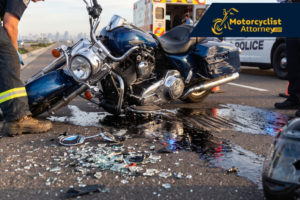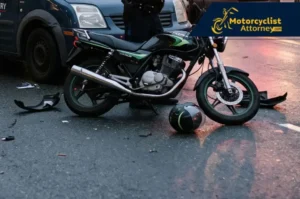
Burbank, California — A fatal motorcycle crash in Burbank left a man dead and a woman critically injured after an electric motorcycle collided with a sedan late Tuesday night. Both occupants of the motorcycle were thrown from the bike during the impact, according to the Burbank Police Department.
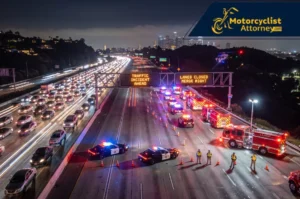
Police officers and paramedics responded at approximately 11 p.m. on July 28, 2026, to the intersection of Alameda Avenue and Hollywood Way. Emergency personnel found the male operator and female passenger suffering from serious injuries.
Both were transported to a local trauma center. The man later died from his injuries, while the woman remained hospitalized in critical condition. Authorities were working with the Los Angeles County Medical Examiner’s Office to confirm the man’s identity and notify his family.
What Burbank Police Reported About the Collision
Preliminary information released by the Burbank Police Department indicates:
- The crash occurred around 11 p.m. on July 28
- An electric motorcycle and a sedan were involved
- The collision happened at Alameda Avenue and Hollywood Way
- A man and a woman were riding on the electric motorcycle
- Both occupants were ejected during the crash
- The man died after being transported to a trauma center
- The woman remained hospitalized in critical condition
- The sedan driver stayed at the scene
- The driver cooperated with traffic investigators
- Police did not observe signs that the sedan driver was impaired
- Unsafe speed by the motorcycle operator may have contributed to the collision
The investigation into the fatal motorcycle crash in Burbank remains active. Police have not publicly released the riders’ identities or a complete account of how the two vehicles collided.
Anyone who witnessed the collision or has relevant video footage is encouraged to contact the Burbank Police Department’s Investigation Division at 818-238-3210.
Police Say Unsafe Speed May Have Been a Factor
Burbank police said their preliminary investigation suggests that unsafe speed by the electric motorcycle operator likely contributed to the collision. However, this remains an initial finding rather than a final determination of legal responsibility.
Investigators may still need to examine:
- The speed and direction of both vehicles
- Traffic signals at the intersection
- Whether either vehicle was turning
- The point and angle of impact
- Skid marks and roadway debris
- Damage to the motorcycle and sedan
- Surveillance and dashboard-camera recordings
- Statements from the surviving driver and witnesses
- Lighting, visibility, and roadway conditions
California Vehicle Code § 22350 prohibits operating a vehicle faster than is reasonable or prudent under the existing traffic, visibility, weather, and roadway conditions. It also prohibits speeds that endanger people or property.
A finding that speed contributed to the crash does not necessarily answer every liability question. Investigators must still determine what each person involved was doing immediately before the collision.
Was the Vehicle an E-Bike or an Electric Motorcycle?
The distinction between an e-bike and an electric motorcycle can be legally important.
Burbank defines an electric bicycle as a pedal-equipped bicycle with an electric motor rated at or below 750 watts. Class 1 and Class 2 e-bikes stop providing motor assistance at 20 mph, while Class 3 assistance must stop at 28 mph. The city separately recognizes motor-driven cycles, mopeds, motorized scooters, and other electric mobility devices.
The Burbank Police Department described the vehicle involved in this collision as an electric motorcycle. Authorities have not publicly released its make, model, power output, registration status, or maximum speed.
The device’s legal classification could affect:
- Licensing requirements
- Registration and insurance rules
- Permitted riding locations
- Passenger restrictions
- Helmet requirements
- Available insurance coverage
Could the Injured Passenger Have a Legal Claim?
A passenger injured in a motorcycle collision may have a claim even when police believe the motorcycle operator contributed to the crash.
Depending on the final investigation, the woman’s potential claim could involve:
- The electric motorcycle operator
- The operator’s applicable insurance coverage
- The driver or owner of the sedan
- Another party whose conduct contributed to the collision
- A manufacturer, if a defective component played a role
- A public entity, if a dangerous roadway condition contributed
There is currently no public finding that the sedan driver acted negligently. Police reported that the driver remained at the scene, cooperated, and showed no apparent signs of drug or alcohol impairment.
Nevertheless, lack of impairment does not resolve other possible issues such as right-of-way, signal compliance, turning movements, or failure to see an approaching motorcycle. Those questions require evidence.
Can the Man’s Family Pursue a Wrongful Death Claim?
A wrongful death claim may be available when another person or entity’s negligence contributes to a fatal collision.
California Code of Civil Procedure § 377.60 allows specified relatives or the deceased person’s personal representative to bring a wrongful death action. Potential claimants can include a surviving spouse, registered domestic partner, children, and certain other qualifying heirs or dependents.
Depending on the evidence, recoverable losses may include:
- Funeral and burial expenses
- Lost financial support
- Loss of household services
- Loss of companionship and guidance
- Medical expenses incurred before death
- Other damages allowed under California law
Because police preliminarily identified the motorcycle operator’s speed as a possible factor, the availability of a claim will depend heavily on whether another person or condition also contributed to the crash.
California generally allows two years to bring an action for an injury or death caused by another party’s wrongful act or neglect. Certain exceptions and shorter deadlines may apply.
Evidence That May Help Explain the Crash
Evidence from a busy intersection can disappear quickly. Surveillance systems may overwrite recordings, vehicles may be repaired, and physical debris may be removed.
Important accident evidence may include:
- The complete police collision report
- Intersection surveillance recordings
- Video from nearby homes and businesses
- Dashboard-camera footage
- Electronic data from the sedan
- Data stored by the electric motorcycle or connected applications
- Photographs and measurements from the scene
- Motorcycle and sedan damage patterns
- Witness statements
- Medical and coroner records
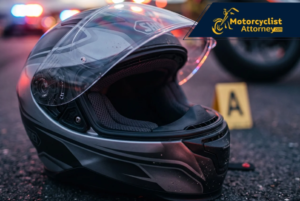
- The riders’ helmets and protective equipment
The electric motorcycle should generally be preserved in its post-crash condition until qualified investigators have an opportunity to inspect it.
How The Motorcyclist Attorney Can Help
A fatal motorcycle collision can leave a family grieving while a seriously injured passenger faces hospitalization, rehabilitation, and uncertain long-term medical needs.
The Motorcyclist Attorney can independently investigate a fatal motorcycle crash in Burbank, preserve vehicle and video evidence, review available insurance coverage, and explain potential injury or wrongful death claims.
We offer:
- Free consultations
- No attorney fees unless compensation is recovered
- Independent investigation of the collision
- Assistance in communicating with insurance companies
- Evaluation of injury and wrongful death claims
- Representation focused on California motorcycle riders and passengers
Every case depends on its particular evidence, and no outcome can be guaranteed. Call 844-284-9437 to speak with a California motorcycle accident attorney.