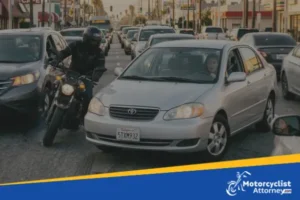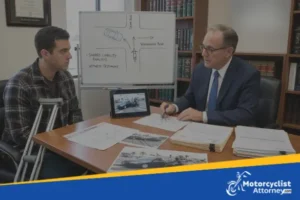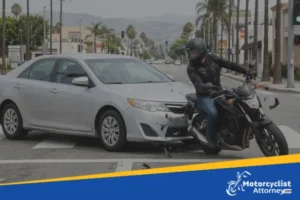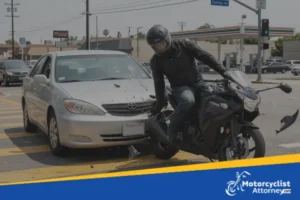

A crash can change everything in seconds. But not every incident automatically qualifies as a motorcycle accident claim in California. Riders often assume that if they were injured, they are entitled to compensation. The reality is more specific.
California law requires proof of fault, measurable damages, and a clear link between the collision and your injuries. Clarity about what legally qualifies can help you avoid costly mistakes and safeguard your rights.
Below, we break down when a motorcycle accident claim in California is valid and when it may not be.
The Legal Foundation: Negligence Under California Law
Most motorcycle accident claims are built on negligence.
A valid negligence claim requires proof of four elements:
- Duty of care – The other driver had a legal obligation to operate safely.
- Breach of duty – That driver failed to act reasonably.
- Causation – The breach directly caused the crash.
- Damages – You suffered measurable harm.
If one of these elements is missing, the claim may fail.
For example, if a driver makes an illegal turn and strikes a motorcycle rider, that breach can support a personal injury claim. However, if no injury or financial harm resulted, compensation may not be available.
Common Motorcycle Accidents That Qualify for Claims
Certain crash types frequently support a motorcycle accident claim in California:
- Left-turn crashes at intersections
- Unsafe lane changes
- Rear-end collisions
- Drivers failing to check blind spots
- Road hazards caused by poor maintenance
A traffic accident caused by distracted or reckless driving often meets the negligence standard.
In serious cases, riders may suffer spinal cord injuries or a brain injury, leading to long-term medical treatment and substantial medical costs.
If negligence is proven, compensation may include:
- Medical expenses
- Lost wages
- Property damage
- Pain and suffering
Each category must be supported by documentation, including medical records and a police report prepared by law enforcement.
When Comparative Negligence Still Allows Recovery
California follows pure comparative negligence. This means you can still recover compensation even if you were partially at fault. Your award is simply reduced by your percentage of responsibility.
Example:
Rider Fault | Total Damages | Recovery |
20% | $100,000 | $80,000 |
40% | $100,000 | $60,000 |
Insurance carriers frequently argue that a motorcycle rider was speeding or lane splitting. A California motorcycle accident lawyer can counter unsupported allegations using witness testimony, accident reconstruction, and physical evidence.
Understanding comparative negligence is essential in any motorcycle accident claim in California, particularly in high-traffic areas like Los Angeles and across Southern California.
Claims Involving Uninsured or Underinsured Drivers
Many riders are hit by drivers who carry minimal coverage.
In these cases, your own insurance claim may involve:
- Uninsured motorist coverage – Covers you if the at-fault driver has no insurance.
- Underinsured motorist coverage – Covers the gap when the at-fault driver’s limits are too low.
The insurance company may attempt to limit payouts. A claims adjuster may dispute the extent of your economic losses or question medical treatment.
Even if the at-fault driver lacks coverage, you may still pursue compensation through your policy or other liable parties.
When a Government Entity May Be Responsible
Not all crashes involve another driver.
A motorcycle accident caused by a roadway defect — such as loose gravel, potholes, or missing signage — may create liability for a public entity.
These claims are more complex because:
- Strict filing deadlines apply
- Special procedural rules must be followed
- Evidence must be preserved quickly
Failure to act promptly can bar recovery entirely.
Situations That May Not Qualify as a Valid Claim
Not every incident supports a claim.
Examples may include:
- Single-vehicle crashes without evidence of a road defect
- Incidents where no actual injury occurred
- Cases lacking proof of damages
- Situations involving a complete rider fault
Additionally, failure to comply with the motorcycle helmet law can complicate recovery if injuries occur. While a violation does not automatically eliminate a claim, it can reduce damages if it contributed to the severity of physical pain or injury.
A careful legal review determines whether your case qualifies.
Types of Damages Available
If your case meets the legal threshold, you may pursue compensation for both financial and personal harm.
Economic damages may include:
- Medical bills
- Lost income
- Loss of income
- Property damage
Non-economic damages may include:
- Pain and suffering
- Emotional distress
- Loss of enjoyment of life
In the most severe cases involving fatal injuries, surviving family members may pursue a wrongful death claim.
Why Early Legal Evaluation Matters
Timing is critical. Early involvement of personal injury lawyers can:
- Preserve crash scene evidence
- Secure surveillance footage
- Obtain medical records
- Coordinate with law enforcement
- Prevent damaging statements to the Insurance company
A California motorcycle accident lawyer can evaluate liability, calculate medical expenses, and assess long-term medical treatment needs.
Delays can weaken leverage during settlement discussions.